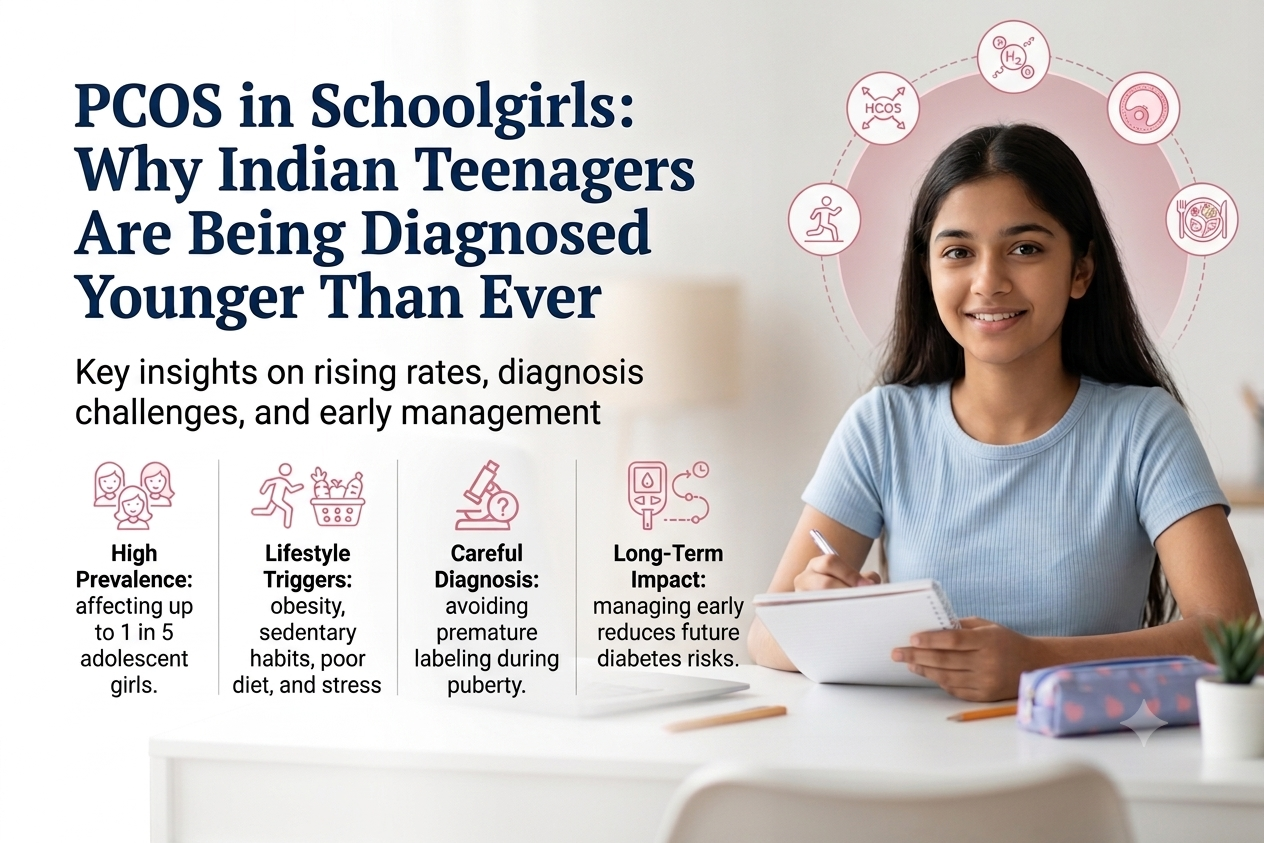
Polycystic Ovary Syndrome has long been thought of as a condition that surfaces when a woman starts trying to conceive in her late twenties or thirties. That picture is now seriously out of date. Across Indian schools and colleges, doctors are diagnosing PCOS in increasing numbers of teenage girls, some as young as thirteen, well before fertility is even a consideration in their lives. A pooled analysis of multiple Indian studies estimates that close to one in five adolescent girls in the country may meet diagnostic criteria for PCOS — a figure that should give every parent and paediatric caregiver pause.
Why the Numbers Are Rising
Part of the increase reflects genuinely better and earlier diagnosis — doctors today are simply more alert to PCOS in younger patients than they were a decade ago, and ultrasound technology has improved. But part of it is real, and tracks closely with rising rates of childhood and adolescent obesity, increasingly sedentary lifestyles, diets heavy in refined carbohydrates and processed food, disrupted sleep patterns linked to late-night screen use, and chronic academic stress, all of which influence the hormonal and metabolic pathways involved in PCOS. Adolescent obesity in India is projected to continue rising sharply over the coming decade, and PCOS rates are likely to rise alongside it.
Why Diagnosis in Teenagers Is Genuinely Tricky
Diagnosing PCOS in an adolescent is more delicate than diagnosing it in an adult woman, because several normal features of puberty — irregular periods in the first year or two after menarche, mild acne, some degree of hair growth change — can resemble PCOS symptoms without actually being the condition. This is why responsible diagnosis in a teenager generally requires a longer period of observation, careful symptom assessment, and caution about labelling a girl with a lifelong diagnosis prematurely, while still not dismissing genuine, persistent symptoms as “just puberty.”
What Parents and Young Women Should Actually Watch For
Persistently irregular periods beyond the first couple of years after a girl’s first period, excessive facial or body hair growth, acne that is severe or resistant to standard treatment, noticeable and rapid weight gain particularly around the abdomen, and dark patches of skin at the neck or underarms (a sign of insulin resistance) are all reasonable triggers for a proper gynaecological evaluation, rather than home remedies or waiting it out.
Why Catching It Early Genuinely Matters
PCOS diagnosed and managed early in adolescence is, in many respects, easier to manage well into adulthood, since lifestyle intervention — diet, activity, and sleep — tends to be considerably more effective at this stage of life than later, and early management can reduce the longer-term metabolic risks associated with the condition, including type 2 diabetes risk later in life. This is not a condition to manage with panic, but it is also not one to dismiss as a passing phase that will simply resolve on its own.
Every woman’s situation is different, and the only way to get an answer specific to you is a proper consultation. Call +91 7045947047 or email info@jkwomenhospital.com to speak with our team.