Ask most people to picture a typical fibroid patient, and they will likely describe a woman in her mid-forties, perhaps approaching menopause. That image, while still statistically common, increasingly misses an important and growing group of patients: women in their twenties and early thirties presenting with heavy periods, pelvic pain, or fertility difficulties, only to discover one or more uterine fibroids on ultrasound.
What Fibroids Actually Are
Uterine fibroids are non-cancerous growths of muscle tissue that develop within or on the wall of the uterus. They are extremely common — global data suggests a substantial majority of women will develop at least one fibroid at some point during their reproductive years, even if many never know it because the fibroid causes no symptoms. Large-scale international research tracking fibroid patterns over recent decades has found that the rate at which new fibroids are diagnosed rises steadily from the early teenage years through to the late thirties, before beginning to decline as women approach menopause — directly reflecting the role oestrogen and progesterone play in fibroid growth.
Why Younger Diagnosis Is Becoming More Common
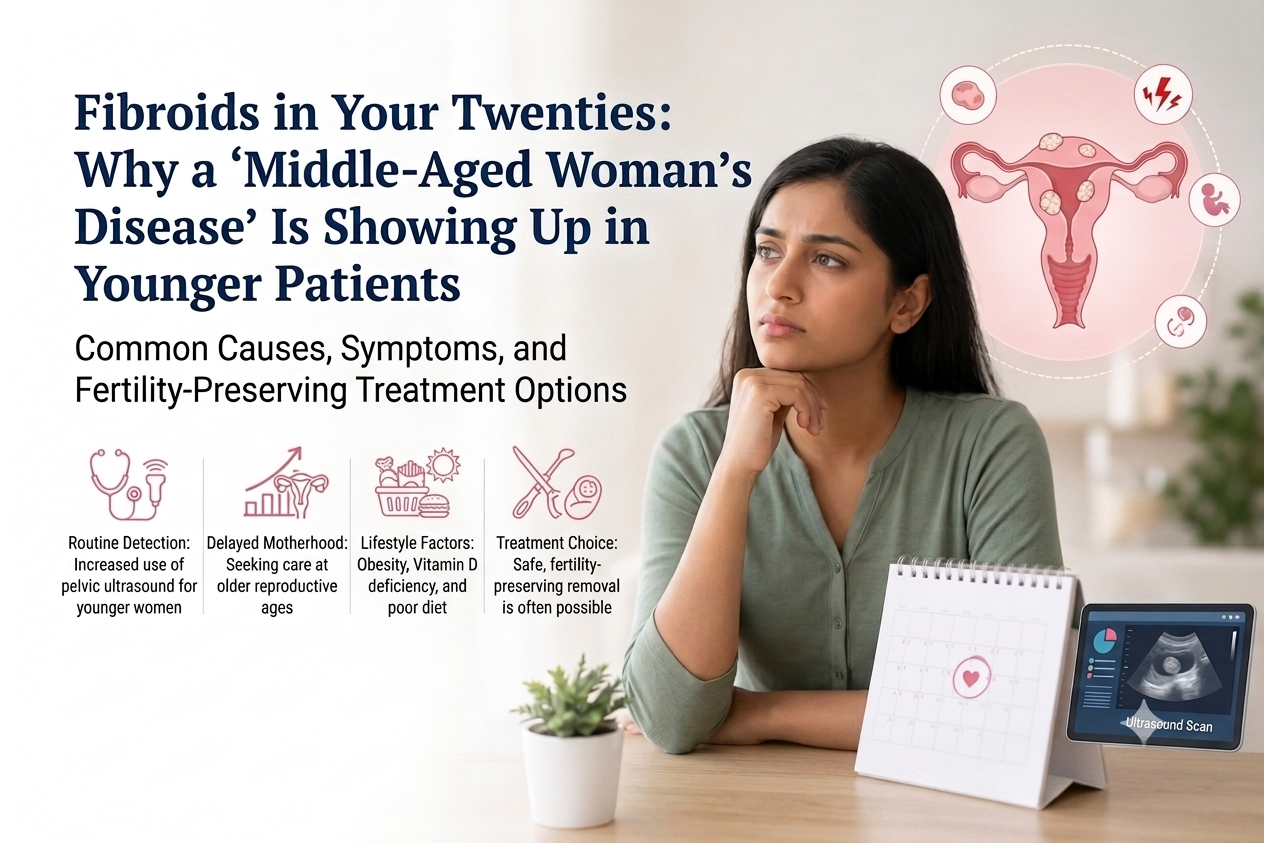
Several factors plausibly explain why more young Indian women are now being diagnosed with fibroids than gynaecologists would have expected a generation ago. Far more women now undergo routine pelvic ultrasound for unrelated reasons, picking up fibroids incidentally that would previously have gone undetected. Delayed childbearing means more women are still actively trying to conceive at an age when fibroid prevalence is naturally climbing, bringing the two issues into the same consultation more often. And lifestyle factors increasingly recognised as influencing fibroid risk — including obesity, vitamin D deficiency, and high consumption of certain processed foods — have become more prevalent among younger urban Indian women generally.
Symptoms Worth Taking Seriously, Whatever Your Age
Heavy menstrual bleeding requiring frequent pad or tampon changes, periods lasting longer than seven days, passing large clots, a sensation of pelvic pressure or fullness, pain during intercourse, or difficulty conceiving without an otherwise obvious explanation are all reasonable grounds for an ultrasound evaluation, regardless of whether you are 24 or 44. Far too many young women normalise genuinely heavy bleeding simply because it has always been that way for them, without realising a fibroid, rather than “just how my body is,” may be the actual cause.
Treatment Does Not Always Mean Surgery
A fibroid diagnosis in a young woman who still wishes to have children understandably triggers anxiety, but treatment today is far more nuanced than it once was. Small, asymptomatic fibroids are often simply monitored. Symptomatic fibroids can frequently be managed with fertility-preserving options, including hysteroscopic or laparoscopic myomectomy — surgically removing the fibroid while carefully preserving the uterus — performed by a surgeon experienced specifically in fertility-conserving fibroid surgery. The right approach depends entirely on the fibroid’s size, number, and location, which is exactly why a personalised evaluation matters more than generic advice.
If any of this resonates with your own situation, Dr. S. Krishnakumar and the team at JK Women Hospital, Dombivli, are happy to talk it through with you. Call +91 7045947047 or write to info@jkwomenhospital.com to book a consultation.