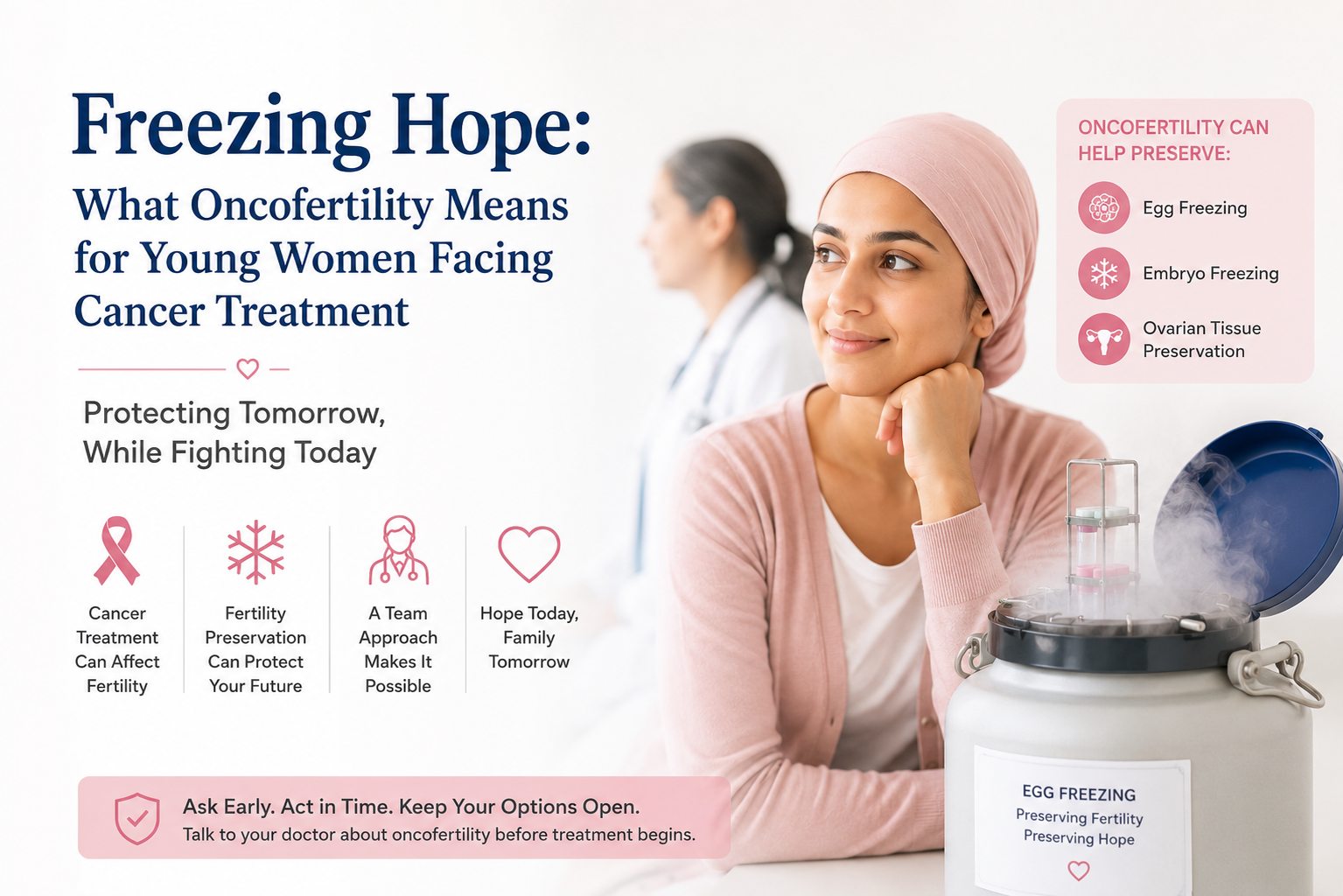
Among the many difficult conversations a cancer diagnosis brings, one question is often raised too late, if it is raised at all: what will this treatment mean for my ability to have children one day? Chemotherapy and radiotherapy, while life-saving, can significantly damage ovarian function and egg reserve, sometimes permanently. The medical field that exists specifically to address this — bridging oncology and reproductive medicine — is called oncofertility, and growing awareness of it is one of the more genuinely hopeful developments in Indian women’s health in recent years.
Why This Conversation Is So Often Missed
When someone receives a cancer diagnosis, the immediate, urgent focus understandably falls on starting treatment as quickly as possible. Fertility preservation can feel like a secondary concern in that moment, and busy oncology teams, focused entirely on the cancer itself, do not always raise the topic proactively, particularly for younger patients who may not yet have children or even be thinking about them. By the time fertility comes up in conversation, in some cases, the window to act may already have narrowed.
What Oncofertility Actually Involves
In practice, oncofertility means a fertility specialist working in close coordination with the oncology team to assess whether egg freezing, embryo freezing, or in some cases ovarian tissue freezing, is feasible before chemotherapy or radiotherapy begins — and crucially, whether the necessary one to two weeks for ovarian stimulation and egg retrieval can be safely accommodated without dangerously delaying cancer treatment. This is a genuinely collaborative decision between oncologist and fertility specialist, never a unilateral one, since the cancer treatment itself always takes priority in timing.
Who Should Specifically Ask About This
Any woman of reproductive age facing chemotherapy, radiotherapy involving the pelvis or abdomen, or certain types of bone marrow transplant should ask her oncology team directly whether a fertility preservation consultation is appropriate before treatment starts — even if no one raises it first. This applies equally to women who are not yet married, do not yet have children, or are unsure whether they want children in the future; preserving the option matters more, at this stage, than having a definite plan for using it.
The Encouraging Part of This Story
Awareness of oncofertility has grown meaningfully in India over recent years, and an increasing number of fertility centres now actively prioritise these consultations, often arranging an urgent appointment within a day or two of referral, recognising that timing is everything in this situation. Many young women who have undergone successful fertility preservation before cancer treatment have gone on, years later, to use those frozen eggs or embryos to build the family they feared they had lost the chance for — proof that this single, sometimes overlooked conversation, held at the right moment, can change the entire shape of a woman’s future.
Every woman’s situation is different, and the only way to get an answer specific to you is a proper consultation. Call +91 7045947047 or email info@jkwomenhospital.com to speak with our team.